
Written by: Raphael Thomas
A Trump Presidency has revealed the darker side of America in many ways. One of those ways was the underlying racism that has now risen to the surface. A driving force for why many people voted for Trump was because of the decline in wages for white Americans. Although the overall productivity of Americans has increased over time, average wages have not reflected this increase, leading to the productivity-wage gap and racial wage inequality.
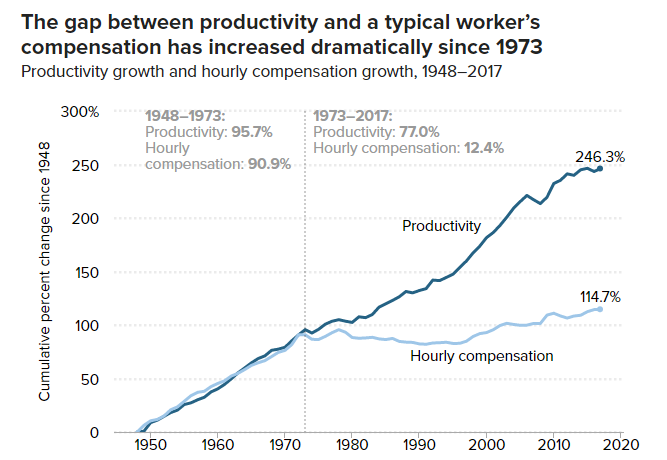
The Economic Policy Institute (EPI) released their charts of 2016 and one of them looked at wages from 1979 to 2015 and how wages have changed between different races and gender groups in the US. The data was originally taken from a previous article on Black workers’ wages have been harmed by both widening racial wage gaps and the widening productivity-pay gap written by Valerie Wilson addressing the issue that white Americans aren’t the only ones losing in America.

The productivity-wage gap has caused everyone to be impacted negatively, regardless of their gender or race. It has disproportionately impacted black communities over white communities. Between 1979 and 2015, racial discrimination was a major driving force towards differences in wage inequality, but the increasing gap between productivity growth and wage growth affected all groups and has contributed to a larger increase in wage distribution between black and white workers.
Widening productivity-pay gap and its impact on black workers
Southern and Midwestern regions of America have disproportionately higher concentrations of black Americans than the other parts of the US. These parts of America have also been shown to be areas with high-inequality and high poverty areas levels. Black families and workers are more likely to congregate in lower-wage distribution areas than white workers and families, causing the wage gap between black and white workers to increase at a faster rate. When wage distribution increases so do wage inequality.
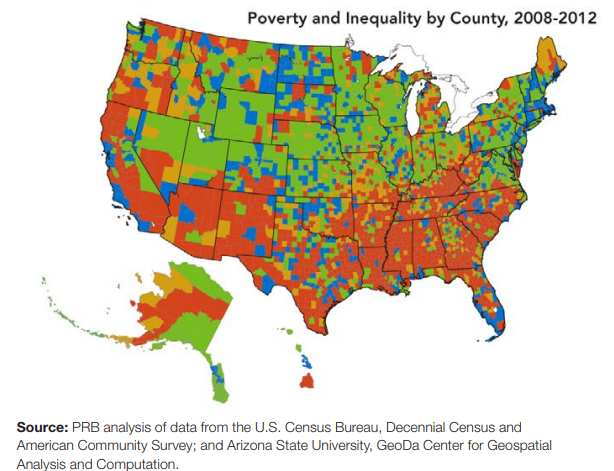
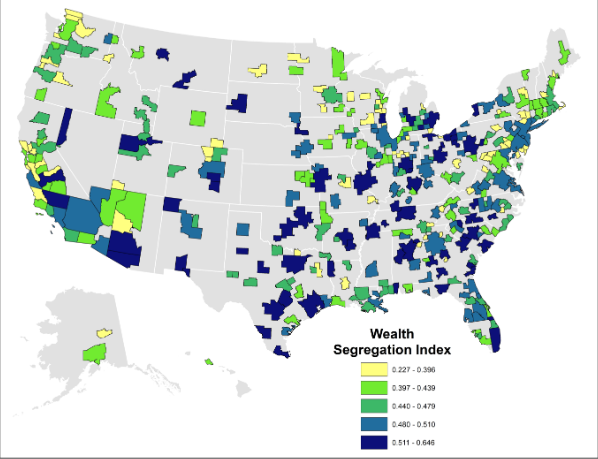
Southern and Midwest regions also have minimum wages which on average are generally lower than the Northeast or Western regions of the US and also increase less frequently. As a result, fewer lower-wage black workers benefited from increases in minimum wages than most whites workers. Wealth segregation is also less seen in areas where white people make up the larger population and more segregated in neighborhoods where there are more black residents. The wage gap between blacks and whites in higher paid regions showed an even larger gap.
The Real Winners
No one is winning. Even though according to this research white and black women’s wages increased the most in relation to productivity, women’s’ wages on average are still low compared to that of their male peers. Women are losing roughly over half a million dollars in her lifetime compared to their male co-workers.
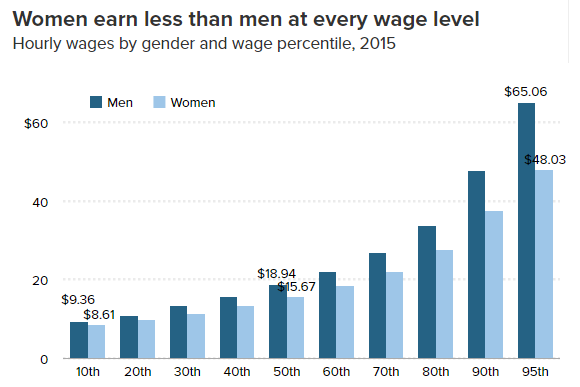
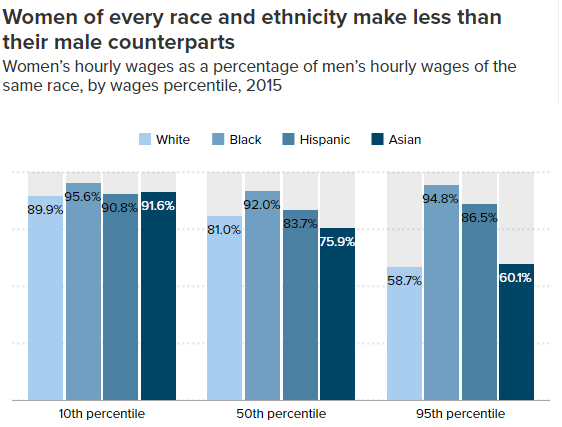
Research has shown that everyone is losing, not just the white males. Addressing the real issues could help with dealing with many of the bigger issues that plague our country.
 Taboo Analytics
Great research paper.
LikeLike